
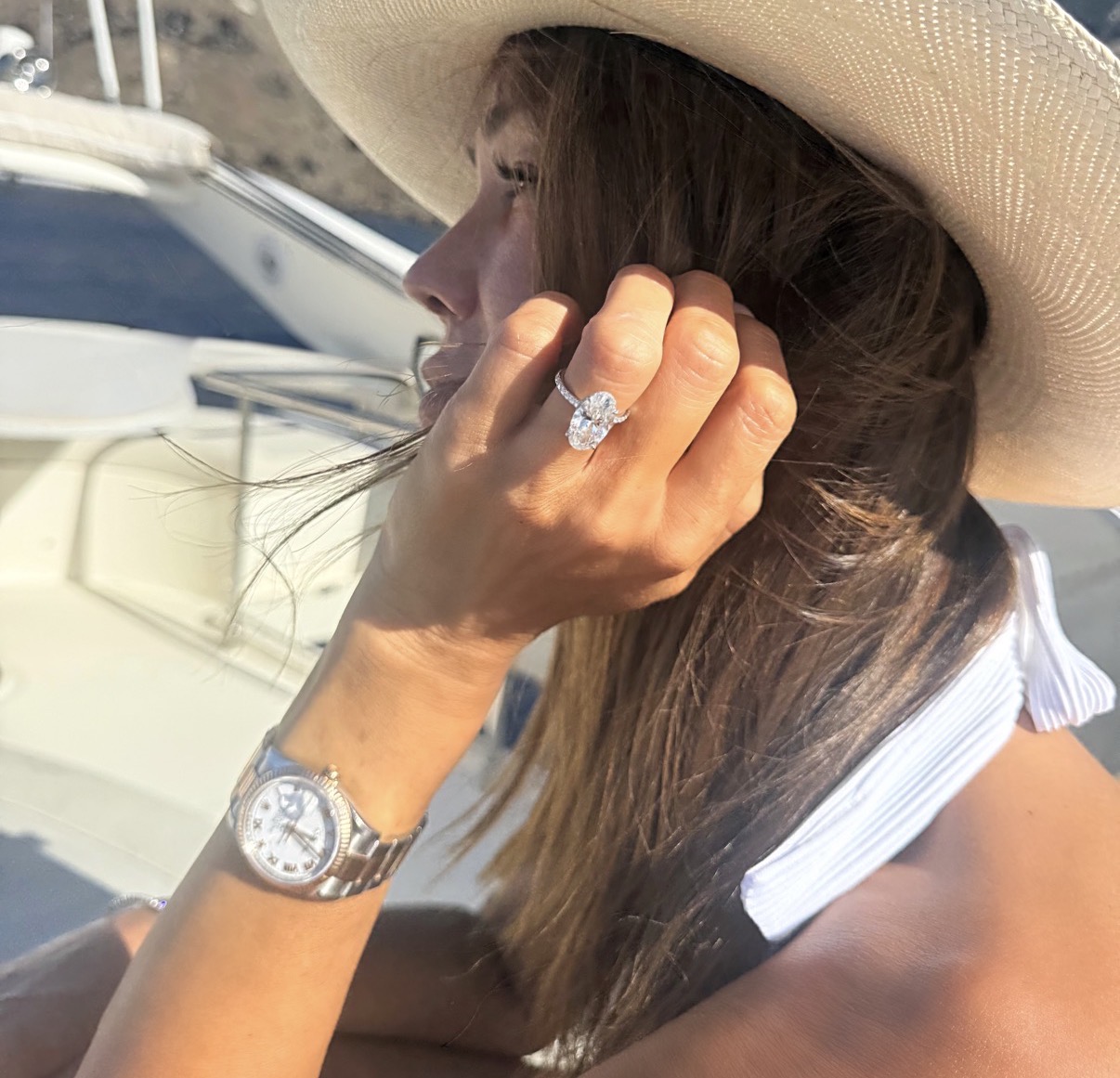
The “moval” is a diamond shape that doesn’t neatly fit into the categories most people know. It isn’t quite an oval, and it isn’t quite a marquise. Instead, it combines characteristics of both, creating a distinctive silhouette that has become increasingly popular among diamond enthusiasts.
A moval features the elongated body of an oval with the tapered ends of a marquise. It occupies a unique space in the world of fancy-shaped diamonds, offering the elegance of an oval with added definition and drama.
What Defines a Moval?
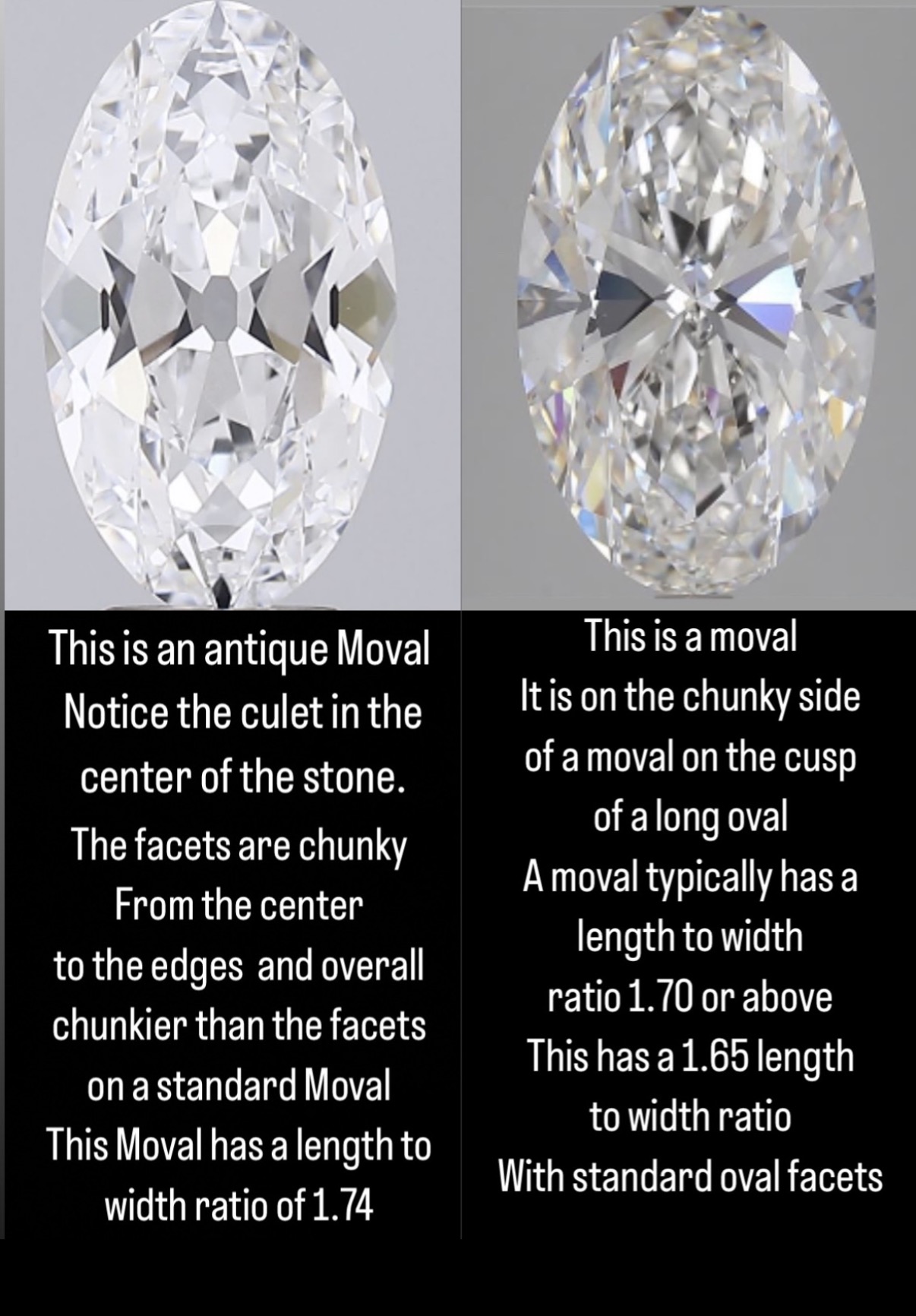
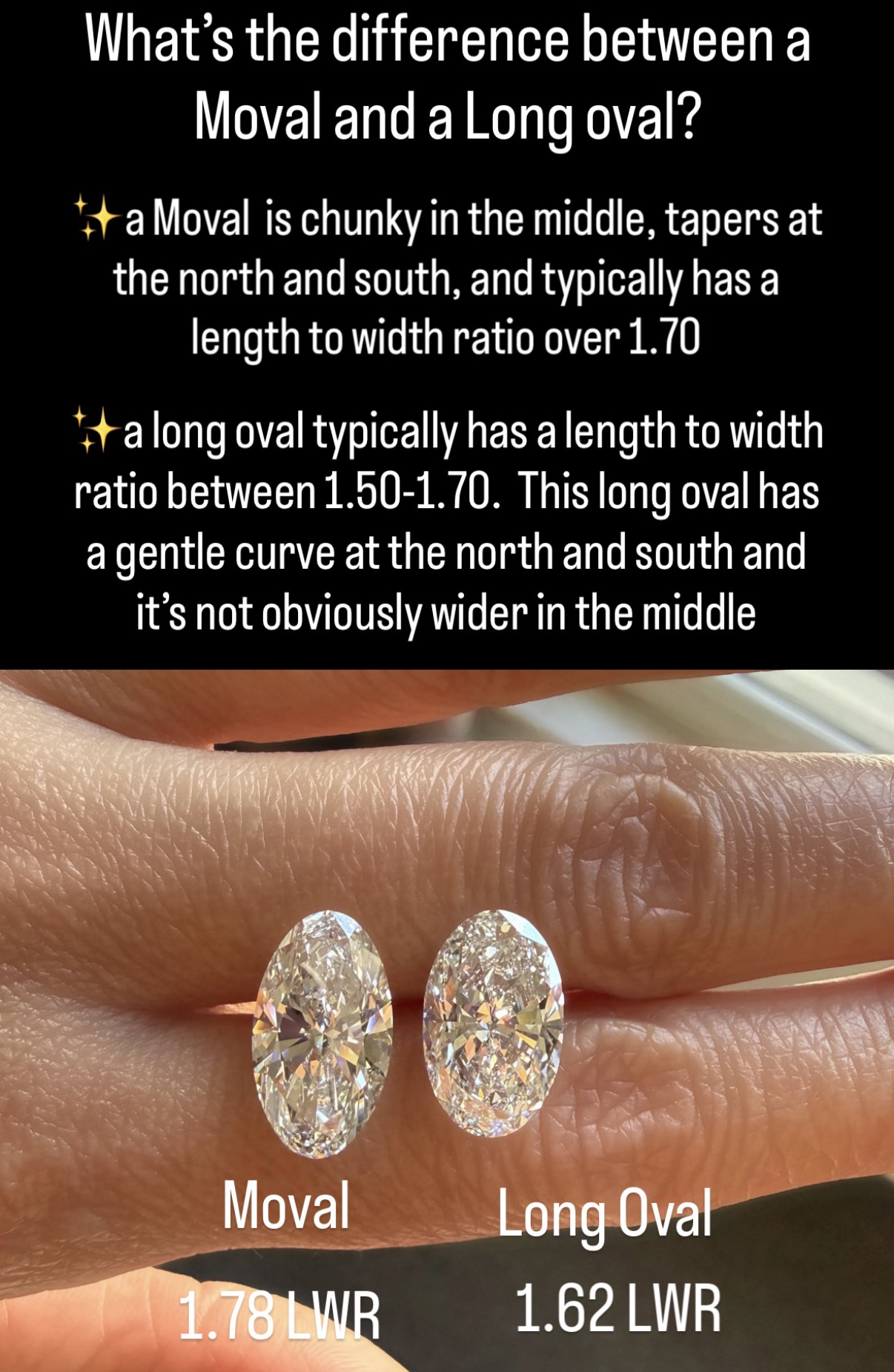
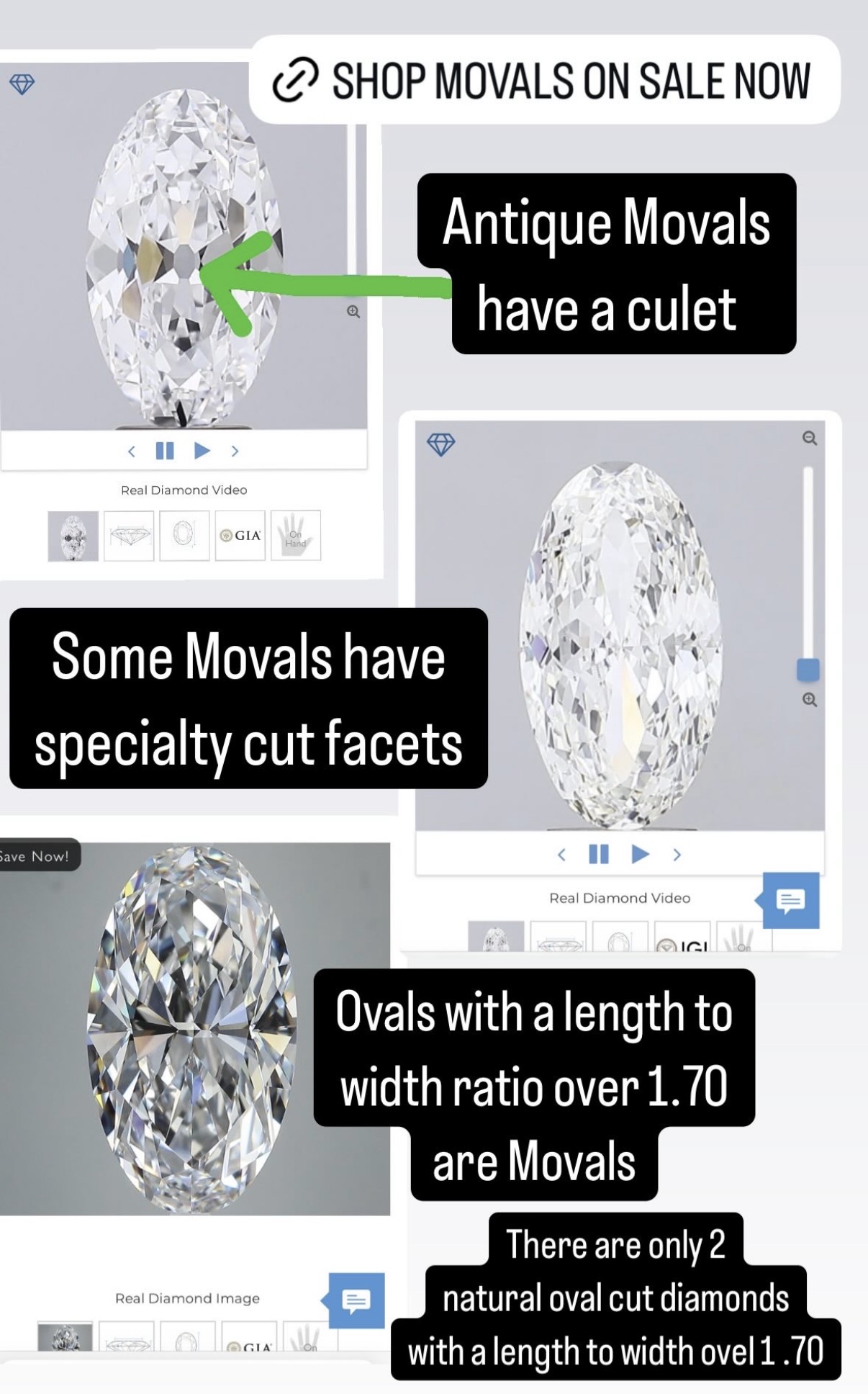
The difference between an oval and a moval comes down to geometry. A traditional oval diamond typically has a length-to-width ratio (LWR) of up to about 1.70. At that proportion, the shape appears soft, balanced, and symmetrical. Once the ratio exceeds approximately 1.70, the ends begin to narrow, creating a silhouette that resembles a softer marquise. This distinction is important because it gives the moval a measurable definition rather than making it simply a matter of appearance or personal interpretation.
Brilliant vs. Old Mine Movals
Movals are available in two primary cutting styles, each with a very different look and feel.
Brilliant Moval
The brilliant moval is the version most people encounter first. It is designed to maximize light return, producing:
- Strong sparkle
- High brilliance
- Crisp facet reflections
- A modern appearance
It’s bright and looks beautiful in photographs and attracts attention from every angle.
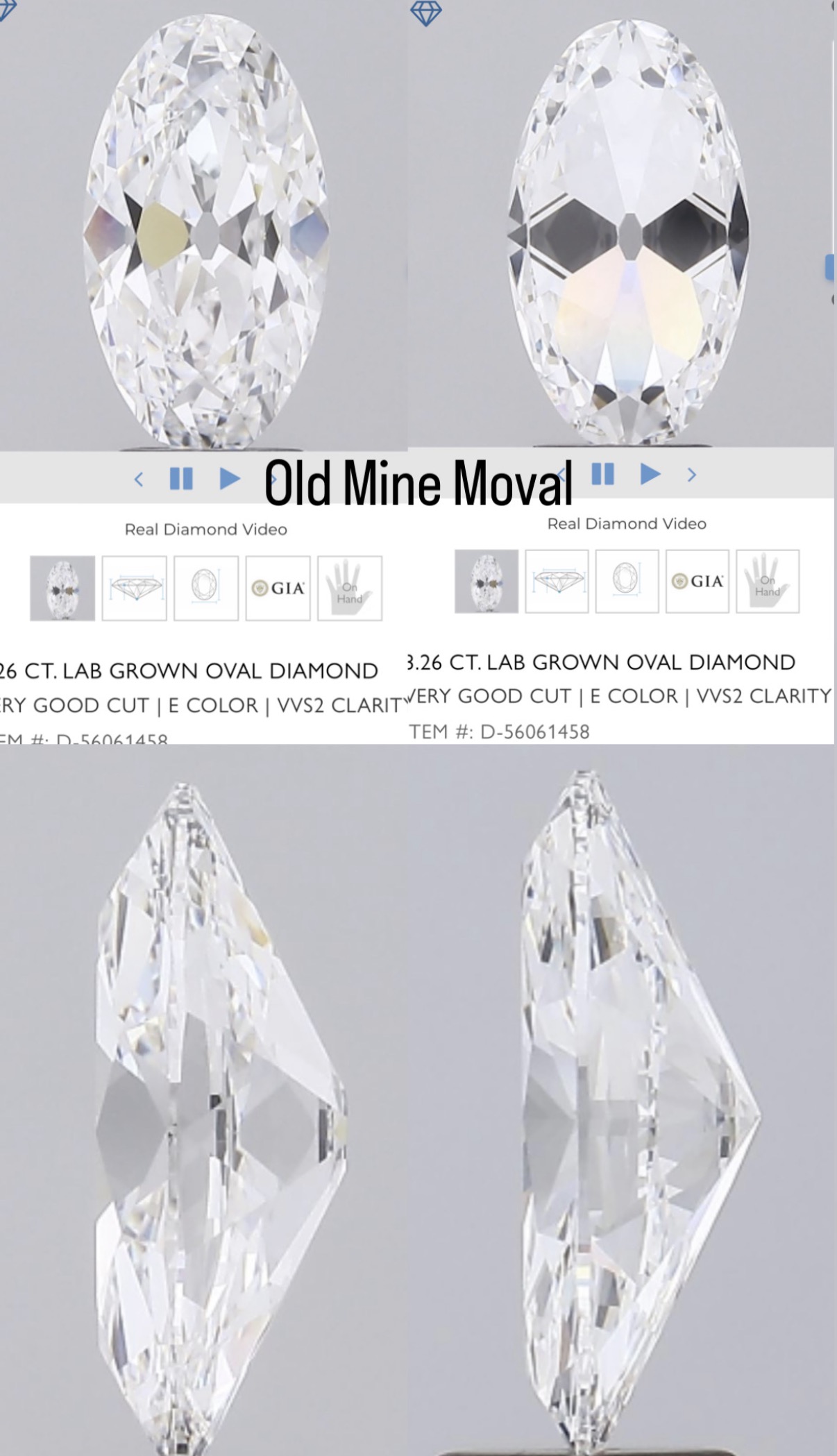
Old Mine (Antique) Moval
The old mine moval, sometimes called an antique moval, offers a completely different aesthetic. Other characteristics include:
- Larger, chunkier facets
- Softer flashes of light
- Greater depth and character
- A vintage-inspired appearance
Rather than emphasizing sparkle alone, antique movals are valued for their warmth, personality, and old-world charm. If the brilliant moval is designed to stand out across a room, the old mine moval invites a closer look.
What to Watch For: The Bow Tie Effect
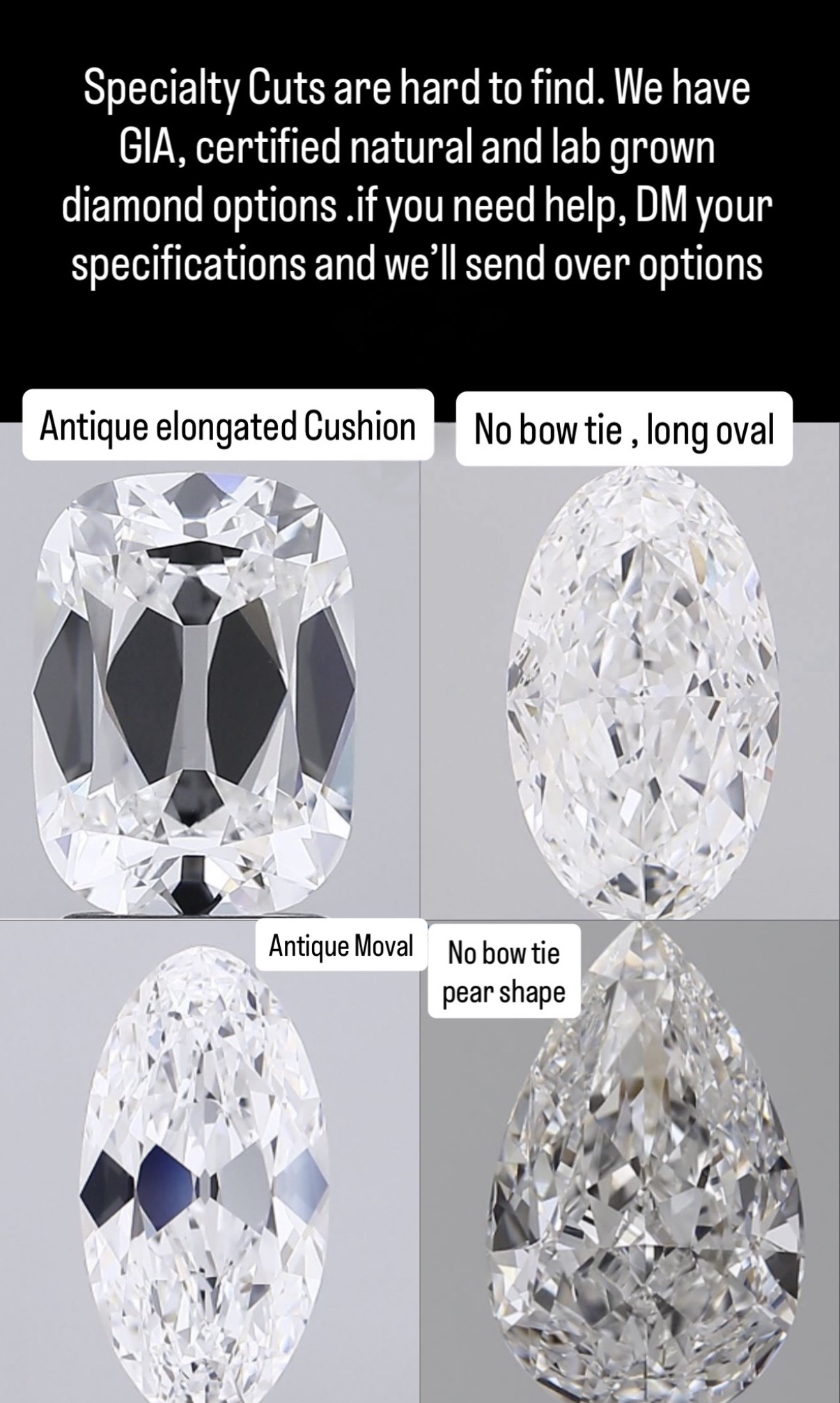
Like many elongated fancy shapes, movals can display a bow tie. A bow tie appears as a dark shadow across the center of the diamond and results from the way light travels through the stone. While some bow ties are minimal, others can be quite noticeable.
When evaluating a moval:
- Review videos, not just photos
- Examine the stone under movement
- Look for even light performance across the center
- Work with a jeweler who can inspect stones individually
Compass Prongs
Compass-set prongs are especially well-suited to the moval shape. Benefits include:
- Protection for the tapered ends
- A clean, balanced appearance
- Minimal interruption of the diamond’s outline
Open Bridge Solitaire
An open bridge solitaire is another excellent option. This design:
- Allows more light to enter the stone
- Reduces visual bulk beneath the diamond
- Highlights the moval’s elongated proportions
Why Collectors Appreciate the Moval
To someone unfamiliar with diamond proportions, a 1.78 LWR moval may simply look like a long oval. To someone who understands diamond geometry, it represents something much more specific. Finding a truly exceptional moval often means locating a stone with:
- The right elongated proportions
- Moderate or no bow tie
- Strong light performance
- A desirable cut style
- A visible culet, in antique examples
A Shape That Stands Apart
One of the moval’s greatest strengths is its subtle uniqueness. It offers the finger-flattering elongation that makes oval diamonds so popular while introducing the architectural definition of a marquise. The tapered ends add sophistication and distinction without sacrificing the softness that many buyers love about oval shapes. The result is a diamond that feels refined, elegant, and just a little unexpected.
Examples From Our Site:
Frequently Asked Questions:
Q: What is a moval diamond?
A: A moval is a hybrid diamond shape that combines the elongated body of an oval with the tapered ends of a marquise.
Q: What length-to-width ratio makes a diamond a moval?
A: Generally, diamonds with a length-to-width ratio above approximately 1.70 begin to display the tapered appearance associated with movals.
Q: Is a moval the same as an elongated oval?
A: Not exactly. While movals are elongated, their defining characteristic is the noticeable narrowing at the ends, which creates a shape that bridges the gap between an oval and a marquise.
Q: Do moval diamonds have bow ties?
A: They can. Like most elongated fancy shapes, movals may exhibit a bow tie effect. The severity varies from stone to stone, making video evaluation especially important.
Q: What is the difference between a brilliant moval and an old mine moval?
A: A brilliant moval emphasizes sparkle and brightness through modern faceting. An old mine moval features larger facets and a visible culet, creating a softer, more antique appearance.
Q: What settings work best for moval diamonds?
A: Compass-set prongs and open bridge solitaire settings are particularly popular because they protect the tapered ends while showcasing the stone’s unique shape.
